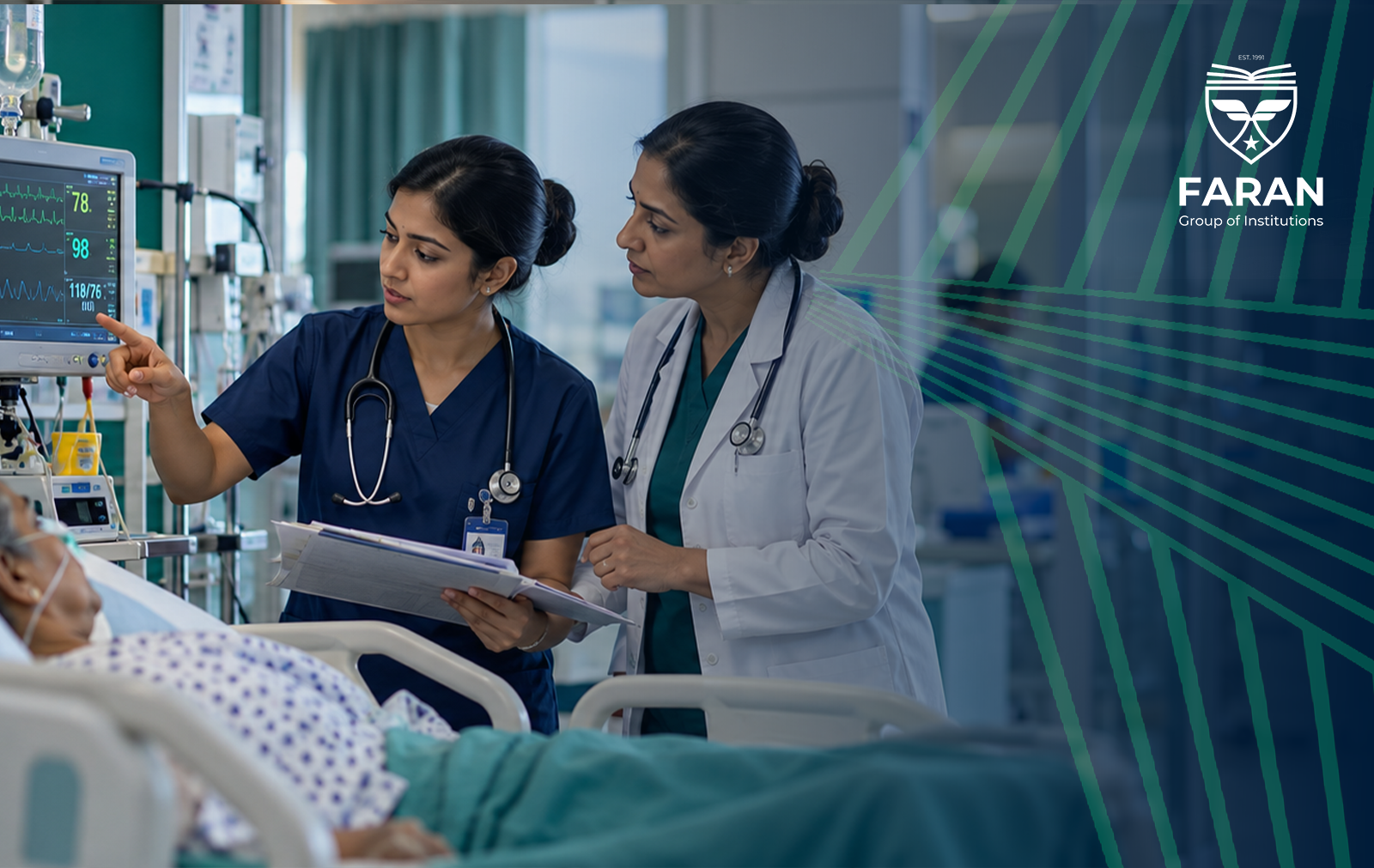
Completing class 12th grade in the science stream opens the door to diverse career opportunities in the medical and healthcare sector. Now-a-days, there is a significant demand for healthcare providers not just in India, but across the globe. MBBS is considered to be the most popular course choice, but it is not the only option available. There are numerous healthcare related courses available beyond the MBBS path. If your goal is to serve the people, earn good remuneration, and build a future in the healthcare sector, then choosing the best medical courses 12th is the initial step to consider.
Let us know the top 10 best medical courses to do after 12th in India, eligibility criteria, course duration, and career prospects.
Top Medical Courses After 12th in India
Check out the below medical courses after 12th list, it gives you a detailed insight into available medical course options with NEET or without NEET examination.
1. MBBS
MBBS is the most sought after medical course in India. The course covers subjects such as anatomy, physiology, biochemistry, pathology, pharmacology, microbiology, medicine, surgery, paediatrics and other clinical disciplines. MBBS course is one of the medical fields that requires utmost dedication and long-term commitment.
Course duration: 5.5 years including internship
Eligibility: Class 12th grade + qualified in NEET
Key areas of learning: Human anatomy, medicine, pharmacology, and clinical practice.
Career pathways
- Doctors
- Healthcare Administration
- Surgeons (After Postgraduation)
- Medical Researcher
Those who are interested in pursuing higher education can enroll in PG courses, like Master of Surgery (MS) and MD (Doctor of Medicine) in various specialties.
2. Bachelor of Physiotherapy (BPT)
The Bachelor of Physiotherapy course focuses on physical rehabilitation and restoring mobility issues of the patients. In fact, it is one of the top medical courses without NEET.
Course duration: 4.5 years (4 years academics plus a mandatory internship of 6 months)
Eligibility: Class 12th grade with PCB as core subjects
Key areas of learning: Anatomy, Physiology, Pathology, Microbiology, Biomechanics and Kinesiology, Pharmacology, exercise therapy, and clinical training.
Career pathways
- Lecturer/professor (after completing MPT course)
- Rehabilitation specialists
- Specialized physiotherapists (Sports, Neurological, Geriatric, Cardiopulmonary, Paediatric)
- Home care physiotherapists
- Corporate physiotherapists
- Health and Fitness trainer
- Ergonomic Consultant
BPT graduates who want to start their own physiotherapy practice should meet applicable professional requirements.
3. Bachelor of Dental Surgery (BDS)
Bachelor of Dental Surgery (BDS) is one of the popular medical course options for the students interested in oral and dental care. The course focuses on diagnosis, prevention, and treatment of conditions that affect teeth, gums and mouth. Practical training is an essential component as students need to develop clinical skills for dental procedures.
Course duration: 5 years (4 years academics and 1-year mandatory internship)
Eligibility: Class 12th grade with PCB as core subjects and qualifying NEET examination.
Key areas of learning: Dental Anatomy, Oral Pathology, Dental Materials, Periodontics, Orthodontics, Prosthodontics, and Oral Surgery.
Career pathways
- Dentists (Private and Government organizations)
- Dental Surgeons
- Orthodontists
- Professor
- College Faculty
- Researchers
In India, there is a demand for skilled dental professionals due to growing efforts to promote oral health awareness and improve access to dental care services.
Interested students can also establish their own dental practice, subjected to applicable regulatory requirements.
4. Bachelor of Ayurvedic Medicine and Surgery (BAMS)
On a global level, Ayurveda is getting global recognition. The course combines ancient ayurveda principles with modern medical education. BAMS course is ideal for the students who have keen interest towards Ayurveda and build a career in Indian System of Medicine.
Course duration: 5.5 years (4.5 years academics and 1-year mandatory internship)
Eligibility: Class 12th with Physics, Chemistry, and Biology/Biotechnology + NEET UG qualification
Key areas of learning: Ayurvedic Fundamentals & Philosophy, Human Anatomy and Physiology, Herbal Pharmacology, Pathology and Diagnostics, and Specialized Therapies in Panchakarma, Shalya Tantra, and Prasuti Tantra.
Career pathways:
- Ayurvedic Doctor
- Panchakarma Specialist
- AYUSH Medical Officer
- Research Associate
- Pharma Quality Control
- Private clinic
5. Bachelor of Homeopathic Medicine and Surgery (BHMS)
The BHMS course is an undergraduate degree program that combines principles of homoeopathic medicine along clinical practices to treat patients with a holistic approach and emphasizes on the body’s natural healing process.
BHMS course is regulated by National Commission of Homoeopathy (NCH), under Ministry of AYUSH, Government of India.
Course duration: 5.5 years (4.5year academics and 1 year mandatory internship)
Eligibility: Class 12th grade (PCB), qualify NEET-UG examination
Key areas of learning: Organon of Medicine, Materia Medica, Homoeopathic Pharmacy, and Repertory
Career pathways
- Wellness Coach
- Researcher
- Medical Officer
- Medical Coding
- Medical Writing
- Pharmacovigilance & Drug Safety
- Lecturer/Professor (After completing Post Graduation)
6. Bachelor of Unani Medicine and Surgery (BUMS)
The BUMS course is an undergraduate program that focuses on the traditional Unani System of Medicine and Surgery.
Course duration: 5.5 years (4.5 years of academics and 1 year of mandatory internship)
Eligibility: Class 12th with PCB, qualifying NEET-UG examination
Key areas of Learning: Basic Principles, Pre-Clinical Subjects, Pathology and Pharmacology, General Medicine and Surgery, and Regimental Therapy
Career Pathways
- Unani Practitioner
- Consultant
- Unani Medical Officer
- Public Health Specialist
- Administrative Roles
- Medical Coding
- Pharmacovigilance Officer / Pharmacist
- Research Scientist
7. Bachelor of Occupational Theory
Bachelor of Occupational Therapy course focuses on evaluating, treating, and rehabilitating individuals with cognitive, developmental, or mental health challenges.
Course duration: 4 years of academics followed by 6-month internship
Eligibility: Class 12th grade with PCB
Key area of learning: Biomechanics & Kinesiology, OT Assessment & Techniques, Assistive Devices & Technology, Psychology, Sociology & Community Medicine, and Neurological & Orthopaedic Rehabilitation
Career pathways
- Occupational Therapists (Paediatric and Community)
- Special needs educator
- Academic and Research roles
- Therapy coordinator
- Neuro rehabilitation therapist
- Hand rehabilitation therapist
8. Bachelor of Science in Nursing (BSc in Nursing)
The Bachelor of Science in Nursing (BSc in Nursing) is an undergraduate program designed to equip students with the essential skills, knowledge, and practical exposure required to excel in the nursing field.
Course duration: 4 years, followed by a clinical internship
Eligibility: Class 12th grade with PCB as core subjects
NEET is not compulsory, but entrance examination is required for institutions, such as AIIMS, PGIMER, and JIPMER. Additionally, some private colleges conduct their own entrance examinations.
Key areas of learning: Nursing Foundation, Medical-Surgical Nursing, Advanced Clinical Practice, Anatomy and Physiology, Pharmacology, Nutrition, and Microbiology and Pathology
Career pathways
- Community health nurse
- Staff nurse
- ICU nurse
- Clinical nurse specialists
- Researcher
- Nurse educator
- Military nurse
- Nursing supervisor, and more
Are you interested in getting into a government career after completing B.Sc. Nursing? Explore the top government job opportunities after B.Sc. Nursing.
9. Bachelor of Optometry (B. Optom)
A Bachelor of Optometry (B.Optom) is an undergraduate healthcare degree that primarily focuses on eye examination, non-surgical eye care, and diagnosis of vision problems.
Course duration: 5 years (4-year academic study and 1-year clinical internship)
Eligibility: Class 12th grade with PCB as core subjects
Key areas of learning: Human Anatomy and Physiology, Ocular Anatomy and Pathology, Geometrical and Visual Optics, Visual Optics and Refraction, Contact Lens Practice, and Binocular Vision.
Career pathways
- Clinical Researcher
- Academic Roles (After pursuing Master of Optometry or PhD)
- Optical Outlet Manager
- Consultant Optometrist
- Optometrist
- Ophthalmic Assistant
- Vision Consultant
- Education Program Manager
- Set up private clinic
- Ophthalmic officer in government hospitals
Pursuing Bachelor of Optometry (B.Optom) opens up opportunities for further education, such as Master of Optometry (M. Optom), MSc in Clinical Optometry, and Master of Science in Vision Science.
10. Bachelor of Pharmacy
B.Pharm course focuses on medicines, drug formulation, pharmaceutical sciences and medication-related knowledge. NEET is not required for pursuing Bachelor of Pharmacy (B. Pharm). The course is regulated by Pharmacy Council of India (PCI).
Course duration: 4 years. However, lateral entry option is available with 3 years duration, for those who have completed D Pharma course.
Eligibility: Class 12th grade with PCB as core subjects
Key areas of learning: Pharmaceutical Chemistry, Pharmaceutics, Pharmacology, Pharmacognosy and Pharmaceutical Analysis.
Career pathways:
- Quality Assurance Analyst
- Drug Inspector
- Medical Representative
- Clinical Data Manager
- Pharmacists
- Regulatory Affairs Specialists
- Clinical Research Associate, and more
Conclusion
The medical field today provides endless opportunities ranging from MBBS, diagnostics, pharmaceuticals, physiotherapy, ayurveda, to management. Choosing the best course ultimately depends on your career interests, preferred work type, academic requirements, practical training, and long-term job prospects. Before applying, students should ensure to check the college recognition status and admission rules.
Choosing the right medical course is not just about getting a degree in hand, it’s a lifelong mission of healing, providing service, and attaining success.