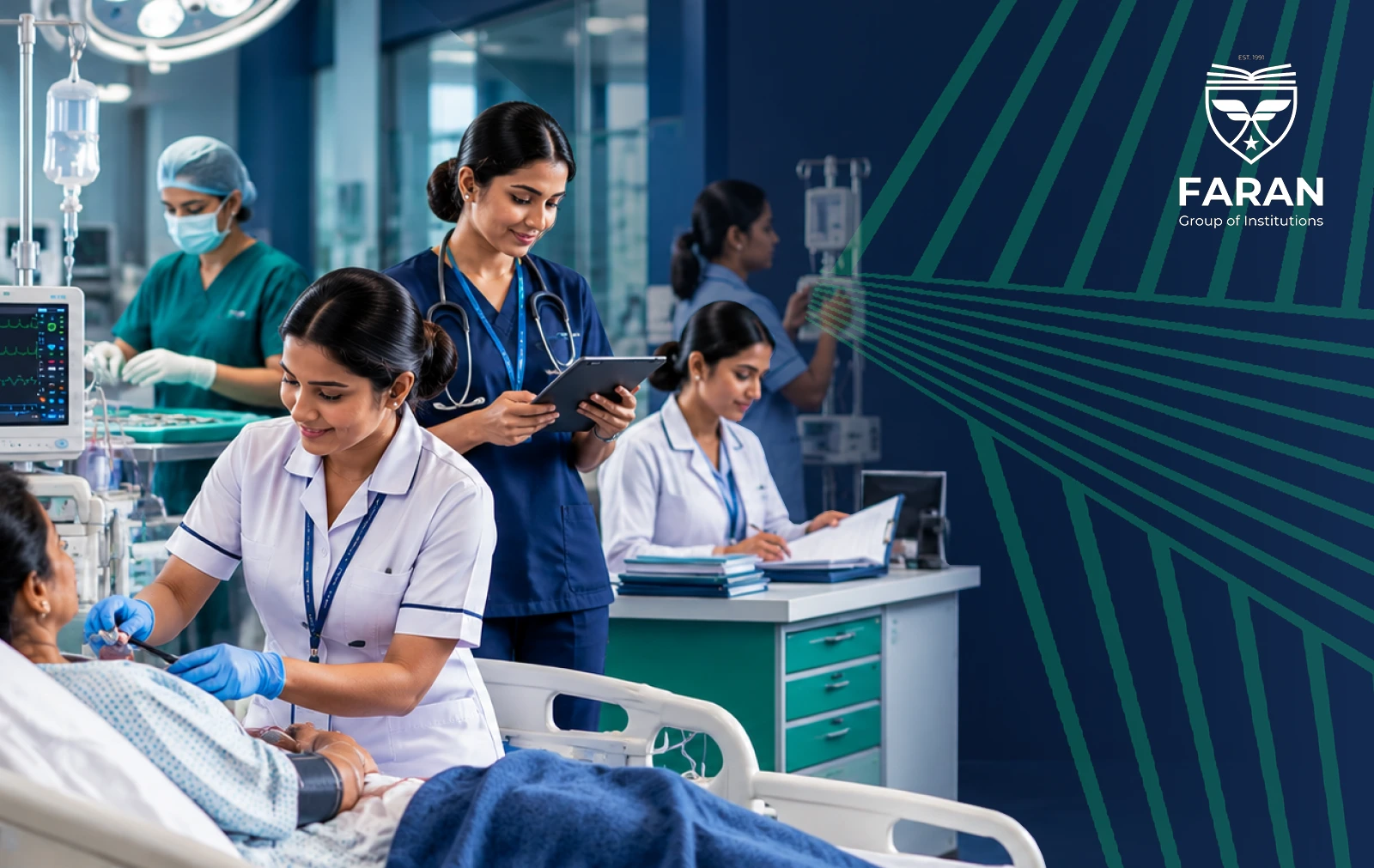
Medical education requires more than textbooks and classroom lectures. Students must understand human anatomy, observe biological processes, practise clinical skills and learn how medical knowledge applies to patient care.
A well-equipped medical college campus supports these activities by providing appropriate laboratories, practical training spaces, libraries, teaching resources and access to clinical learning environments.
For NEET aspirants and prospective MBBS students in India, understanding the importance of medical college infrastructure can help them evaluate how effectively a campus supports medical education.
What Is Medical College Infrastructure?
Medical college infrastructure refers to the physical facilities, equipment, and learning resources used to support medical education.
It includes academic buildings, laboratories, lecture halls, libraries, clinical skills centres, teaching hospitals and student facilities.
The National Medical Commission (NMC) establishes standards for undergraduate medical education in India, including requirements relating to teaching spaces, libraries, skills laboratories and clinical training facilities.
However, infrastructure quality depends on more than the presence of buildings and equipment. Students also need appropriate access, trained educators, functional facilities, and opportunities to apply their knowledge.
Why Is Infrastructure Important in Medical Education?
Medical education combines theoretical knowledge with practical learning and clinical experience.
Well-equipped medical education facilities help students connect classroom concepts with practical applications. They create opportunities to observe, practise, discuss, and evaluate different aspects of medical care.
For example, students may learn about the cardiovascular system in a lecture, study its structure in an anatomy laboratory, and later observe related clinical findings during supervised hospital learning.
Each environment contributes something different.
Appropriate infrastructure can support:
- Practical Understanding of Medical Concepts
- Development of Clinical Skills
- Safe and Supervised Learning
- Access to Educational Resources
- Collaborative Learning
- Exposure to Healthcare Environments
- Development of Professional Competencies
The educational value of these facilities depends on how effectively they are incorporated into teaching.
Essential Facilities in a Medical College
Different facilities support different stages of medical education.
1. Anatomy Laboratories
Anatomy is a foundational subject in medical education because students need to understand the structure and relationships of different parts of the human body.
Anatomy laboratories may provide access to anatomical specimens, models, teaching materials, and other approved learning resources.
These facilities help students develop an understanding of:
- Human Body Structures
- Anatomical Relationships
- Organ Systems
- Spatial Orientation
- Clinical Relevance of Anatomy
Practical anatomy learning can complement classroom teaching by allowing students to examine structures in greater detail.
2. Physiology and Biochemistry Laboratories
Physiology focuses on how the body functions, while biochemistry examines the chemical processes involved in living systems.
Laboratory sessions can help students connect theoretical concepts with observations and practical exercises.
For example, physiology practicals may involve studying selected physiological measurements, while biochemistry sessions may introduce laboratory principles relevant to biological processes.
Such activities can strengthen students’ understanding of the scientific foundations of medicine.
3. Clinical Skills and Simulation Laboratories
Clinical skills laboratories provide controlled environments where students can practise selected procedures and communication skills before performing them in real clinical settings.
Depending on the facility, training resources may include mannequins, task trainers, simulated patients and audiovisual learning equipment.
Students may practise:
- Basic Clinical Examination Techniques
- Patient Communication
- Selected Procedural Skills
- Clinical Teamwork
- Recognition of Simulated Clinical Problems
- Responses to Structured Clinical Scenarios
Simulation allows learners to practise and receive feedback without exposing actual patients to unnecessary training-related risks.
However, simulation is a supplement to clinical experience, not a complete replacement for supervised learning with real patients.
4. Lecture Halls and Teaching Spaces
Classroom infrastructure supports lectures, demonstrations, discussions and interactive learning.
Appropriate seating, visibility, acoustics and audiovisual facilities can make it easier for students to follow complex subjects.
Digital displays and other teaching aids may help educators explain anatomical structures, clinical processes and diagnostic concepts.
Nevertheless, effective teaching depends on how these resources are used rather than their sophistication alone.
5. Medical Libraries and Digital Resources
Medical students need access to reliable information throughout their education.
A medical college library may provide textbooks, reference materials, academic journals and digital learning resources.
These resources support:
- Independent Study
- Examination Preparation
- Research-Based Learning
- Understanding Medical Literature
- Revision of Clinical Concepts
- Development of Evidence-Based Thinking
Access to appropriate educational materials also helps students learn how to evaluate information rather than relying entirely on classroom notes.
6. Teaching Hospitals and Clinical Learning Facilities
Teaching hospitals are an important part of medical education because they provide opportunities to observe how medical knowledge is applied in patient care.
Under appropriate supervision, students may participate in clinical learning activities involving patient histories, examinations, case discussions and observation of healthcare procedures.
Different hospital departments can expose students to a range of medical conditions and clinical responsibilities.
The Role of Teaching Hospitals in Medical Education
A teaching hospital connects academic learning with real healthcare situations.
Students may study a condition in textbooks before encountering related symptoms, examination findings and clinical decisions during supervised hospital postings.
This can help them understand how medical knowledge is applied in practice.
Clinical learning may involve:
- Observing Patient Assessment
- Participating in Supervised Clinical Discussions
- Understanding Diagnostic Processes
- Learning Professional Communication
- Observing Multidisciplinary Teamwork
- Developing Awareness of Patient Safety
- Understanding Ethical Responsibilities
The quality of clinical education depends on suitable supervision, patient consent, learning opportunities and the organisation of clinical training.
A large hospital alone does not guarantee meaningful student exposure.
How Infrastructure Supports Practical Learning
One of the main benefits of appropriate campus infrastructure is the opportunity to learn through different methods.
Connecting Theory With Practice
Laboratories and clinical facilities help students understand how classroom concepts relate to practical observations.
This connection is particularly useful in subjects that involve complex structures, physiological processes and clinical applications.
Practising Skills Before Patient Contact
Simulation and skills laboratories provide opportunities to practise selected tasks under supervision.
Students can receive feedback, identify mistakes and improve their technique before participating in relevant patient-care activities.
Supporting Collaborative Learning
Group demonstrations, laboratory sessions and clinical discussions encourage students to communicate and solve problems together.
These experiences can also introduce students to the importance of teamwork in healthcare.
Encouraging Independent Learning
Libraries, study areas and digital resources support revision and self-directed learning.
Students can use these facilities to explore topics in greater depth and strengthen areas where they need additional understanding.
What Should Students Look for in Medical College Facilities?
When evaluating a medical college, students and parents should consider how well the infrastructure supports actual learning.
Useful questions include:
- Are the Laboratories Functional and Accessible?
- Are Practical Sessions Conducted Regularly?
- Is There a Suitable Clinical Skills Laboratory?
- Are Students Given Opportunities for Supervised Practice?
- Are Relevant Books and Digital Resources Available?
- Is Clinical Teaching Properly Organised?
- Are Equipment and Learning Spaces Maintained?
- Are Facilities Appropriate for the Number of Students?
- Are Qualified Educators Available to Guide Practical Learning?
- Does the Institution Meet Applicable Regulatory Requirements?
It is also useful to understand how the campus connects academic learning with clinical training.
For example, students considering different healthcare education pathways may benefit from understanding the role of practical learning in nursing education, where access to supervised training and learning resources is also relevant.
Does Better Infrastructure Guarantee Better Medical Education?
No. Infrastructure is an important supporting factor, but it does not independently determine educational quality.
A medical college may have modern equipment, yet students may gain limited educational value if they cannot access it regularly or receive adequate guidance.
Similarly, a well-maintained laboratory with suitable teaching resources may support effective learning when practical sessions are thoughtfully designed.
Students should therefore evaluate infrastructure alongside:
- Teaching Quality
- Curriculum Implementation
- Clinical Supervision
- Practical Learning Opportunities
- Student Access to Resources
- Institutional Academic Standards
The focus should be on the learning experience that facilities make possible.
Conclusion
A well-equipped campus matters in medical education because students need environments where they can study scientific concepts, practise clinical skills and participate in supervised healthcare learning.
Anatomy laboratories, physiology and biochemistry laboratories, simulation centres, libraries, lecture halls and teaching hospitals each contribute to different aspects of medical education.
However, medical college infrastructure should be evaluated by its educational usefulness rather than appearance alone.
For prospective MBBS students and parents, understanding how facilities are maintained, accessed and integrated into teaching can provide a more meaningful basis for evaluating the learning environment.